I n the novel EIDOS, M1 is described as:
“M1 had a yellowish, semi-transparent crystalline structure, partially organic in nature, capable of storing and processing quantum information with unprecedented density and stability, without requiring any external energy source. From within it emanated a 575-nanometer glow that gave it a soft and warm tone, bright without being blinding, almost nostalgic. A constant, unchanging luminescence, like a note held in time. Its surface was smooth, hard and unbreakable.”
There is an unwritten rule in good science fiction: what we imagine today, someone may be researching tomorrow. Or perhaps they are already researching it now, in a laboratory that will never make the headlines.
M1, the material that in the universe of Eidos allows the entirety of a virtual world to be stored and maintained inside a cube barely thirty centimeters across, does not exist. Not yet. Its properties, however, do not emerge from arbitrary fantasy. Each one has a precise echo in real and active lines of research: peer-reviewed papers, laboratory prototypes and scientific advances published between 2024 and 2025.
This article is not intended to reveal a secret technology or sell futuristic smoke. Its purpose is simpler and more honest: to show where science is actually heading and to ask what might happen if several of those lines of research eventually converged into a single material.
Because, taken separately, many of M1's properties already exist.
The problem that makes it necessary
Humanity generates information at an overwhelming pace. Projections estimate that the world will need to manage more than 175 zettabytes of data by the middle of this decade, a volume far beyond the practical capacity of any single existing technology. Today's data centers consume immense amounts of energy just to remain operational, and much of that cost is not devoted to computation itself but to preventing heat from destroying the systems that make computation possible.
The cost is no longer merely economic. It is thermodynamic. Keeping information alive costs energy, and that cost keeps rising. In this context, science is searching for ways to change the very substrate on which the memory of the world is written. Not to improve what already exists, but to replace it.
First clue: the crystal that lasts for billions of years
In 2013, Professor Peter Kazansky's team at the University of Southampton developed what became known as the Superman Memory Crystal: a fused-quartz disk capable of storing data in five simultaneous dimensions, three spatial and two optical, using femtosecond laser pulses that inscribe nanostructures barely 20 nanometers wide inside the material.
A single disk can hold 360 terabytes and preserve them for billions of years without degradation or external energy, while withstanding temperatures of up to 1,000 °C and extreme pressures. The estimated stability of the nanostructures written into fused quartz is on the order of 10²⁰ years at room temperature.
In September 2024, the same team stored the complete human genome, roughly three billion base pairs, inside one of these crystals. The disk now rests in the world's oldest salt mine, in Hallstatt, Austria, as part of the Memory of Mankind project. The idea is as ambitious as it is unsettling: that any future entity with sufficient intelligence might be able to reconstruct a human being from that information.
“The exceptional durability of the 5D memory crystal ensures that this information could potentially endure until the end of the universe.”
— Prof. Peter Kazansky, 2024
The semi-transparent, hard and unbreakable cube of M1 has its most direct ancestor here.
Human genome stored on 'everlasting' memory crystal — University of Southampton (2024)
5D memory crystal — technical specifications and durability
Second clue: DNA as a hard drive
If fused quartz gives M1 its durability, DNA could give it its density.
One gram of DNA can, in theory, contain more than 215 petabytes of information. In terms of volumetric density, it exceeds conventional storage media by eight orders of magnitude. The principle is simple: translate zeros and ones into sequences of chemical bases, adenine, thymine, cytosine and guanine, instead of relying on silicon cells. DNA can also remain stable for more than 1,000 years without continuous energy consumption.
The most relevant advance for thinking about M1 came in July 2025, when researchers reported the synthesis of so-called DNA-MOF crystals: structures in which DNA is integrated into a porous crystalline framework, a Metal-Organic Framework, reaching a theoretical density of 106.6 exabytes per gram while protecting the stored information from heat, ultraviolet radiation and enzymatic degradation. The estimated lifetime exceeds 24,000 years under normal environmental conditions, without refrigeration or maintenance.
This is, in precise chemical terms, what M1 describes in the novel: organic in density and self-organization, crystalline in protection and stability. It is not a metaphor.
In December 2025, the PERFECT PCR method was also published, bringing DNA storage close to 92% of the maximum theoretical density and overcoming one of the main technical barriers that had so far kept it from becoming practical.
Interwoven DNA-MOF crystals for multi-millennial data storage — bioRxiv (July 2025)
PERFECT PCR: Advancing DNA Data Storage to Near-Maximal Density — bioRxiv (December 2025)
DNA for future data storage — Nature (2022)
Third clue: memory without continuous power
M1 is not a passive archive. In the novel, it also processes and maintains information autonomously. That idea has a real-world counterpart.
In October 2024 and February 2025, researchers from Argonne National Laboratory and the University of Chicago presented solid-state crystal storage using atomic defects: imperfections the size of a single atom inside rare-earth-doped crystals. Reading and writing are performed optically, with light. No continuous electrical current. No moving parts. No magnetic field. Projected capacity: terabytes inside a millimeter-scale crystal.
The important detail is this: the system is fully passive at rest. It consumes no energy while storing information. Energy is required only during writing or reading. Without invoking any impossible physical principle, this fits precisely with one of M1's defining properties.
Terabytes of data in a millimeter crystal — UChicago PME (2025)
Quantum-inspired advancement turns crystal gaps into terabyte storage — Phys.org (February 2025)
Quantum research paves the way toward ultra-high-density optical memory — Phys.org (October 2024)
Fourth clue: energy no one has to supply
M1 works without cables, without a reactor and without any visible power source. This is probably the property that seems furthest from reality. Yet even this is not as distant as it may appear.
Betavoltaic batteries convert the radiation emitted by certain isotopes into electricity continuously and for decades, without recharging or maintenance. They are not nuclear batteries in the conventional sense. They rely on beta-particle emission, which can be blocked by a thin sheet of aluminum and can be made safe through appropriate encapsulation. The physics is analogous to that of a solar cell, with one key difference: the radiation source is internal to the material.
In January 2024, the Chinese startup Betavolt presented a prototype based on nickel-63 and diamond semiconductors, measuring 15 × 15 × 5 millimeters and capable of generating electricity for 50 years without recharging. In March 2025, researchers at South Korea's DGIST presented a version based on carbon-14, with a generation half-life of 5,730 years.
But the most elegant source for a material like M1 would be ambient omnipresent radiation: background electromagnetic radiation, thermal fluctuations and low-energy cosmic rays. Energy harvesters are an active field of research: devices based on graphene, carbon nanotubes or molybdenum disulfide capable of rectifying ambient electromagnetic waves with increasing efficiency. A low-demand system connected to this kind of harvesting does not violate any known law. It is engineering, not magic.
An honest note: neutrinos, which pass through the entire Earth while barely interacting with matter, are theoretically abundant but practically unusable. Their probability of interacting with any material is so small that no reasonable system could extract useful energy from them. They are mentioned here only to distinguish them from sources that are genuinely plausible.
Nuclear battery that produces power for 50 years — The Independent (2024)
Nuclear Batteries: Energy Storage for Decades — IEEE Spectrum (2025)
Nanomaterials and Devices for Harvesting Ambient Electromagnetic Waves — Nanomaterials / NCBI (2023)
Fifth clue: the light that never goes out
M1 emits a constant glow at 575 nanometers: a warm amber tone, steady and unchanging. In the novel, it is described as “a note held in time.”
In the visible spectrum, 575 nm corresponds to a warm yellow-amber. This wavelength is characteristic of certain materials with persistent luminescence: structures that absorb energy and release it gradually and continuously without an active power supply. Crystal dopants with activators such as Mn²⁺ in zinc silicate matrices, or Ca(Sr)ZnOS compounds, can produce tunable emissions in this exact range and are currently being studied for emergency signage, bioimaging and long-duration markers.
The most striking reference arrived in November 2025, when researchers at the University of Colorado Boulder published in Nature Materials the creation of the first time crystals visible to the naked eye: structures in liquid crystals that, once initiated with light, maintain self-sustaining motion indefinitely without additional energy input. The mechanism is elegant: dye molecules absorb photons, change shape, and that change feeds back through the crystal indefinitely. A system that sustains itself.
It is not exactly luminescence. It is something more fundamental: evidence that certain materials can maintain stable dynamic states autonomously, by virtue of their internal architecture. That is the physical principle that would make M1's constant light conceivable.
Physicists have created a new 'time crystal' — CU Boulder / Nature Materials (2025)
Table: fiction versus science
| M1 property | Real scientific counterpart | Main source |
|---|---|---|
| Semi-transparent, unbreakable crystalline structure | 5D fused quartz: 360 TB stable for billions of years | University of Southampton, 2024 |
| Partially organic nature | DNA-MOF crystals: DNA inside a crystalline metal-organic framework, 106.6 exabytes/g, >24,000 years | bioRxiv, July 2025 |
| Unprecedented storage density | DNA: 215 petabytes/gram; DNA-MOF: 106.6 exabytes/gram | Nature 2022; bioRxiv 2025 |
| Passive internal quantum processing | Atomic defects in doped crystals: terabytes without continuous current | Argonne / University of Chicago, 2024–2025 |
| Energy autonomy | Betavoltaics, 5,730-year half-life; ambient radiation harvesting | Betavolt 2024; DGIST 2025; Nanomaterials 2023 |
| Constant luminescence at 575 nm | Mn²⁺ / Ca(Sr)ZnOS persistent luminescence; self-sustaining time crystals | Nature Materials, 2025 |
What is still missing
What does not yet exist is the material capable of integrating all these abilities into a single coherent architecture. Combining long-duration crystals, DNA protected within MOF matrices, passive memory, energy harvesting and stable luminescence is, today, an engineering challenge rather than a physical impossibility. None of M1's properties contradicts any known law of physics or chemistry. What is missing is time, resources and the right question asked in the right way.
Good speculative science fiction shines precisely at this point: not by inventing impossibilities, but by observing where technologies already in development might eventually converge.
The most important thing about M1
The most important thing about M1 is not its technical capacity. It is what it causes.
In Eidos, M1 makes vast infrastructures unnecessary, eliminates constant maintenance and frees the Custodians from the task that had defined their existence for centuries. The history of our civilization has always advanced through the substrate of its memory: stone, papyrus, print, silicon, the cloud. Each leap reshaped entire societies. M1 pushes that evolution to its final logical frontier.
When technology allows an entire world to fit inside a compact, silent and almost eternal object, the question stops being technical and becomes existential: if a whole world can continue its course sealed within a perfect and untouchable crystal, is it still a living world, or has it become the most beautiful relic in the universe?
A note on Eidos
The line between rigorous science fiction and technological fantasy is simple: is there any known physical law that forbids this?
In the case of M1, the answer is no. None of its properties directly contradicts the laws of physics or chemistry. All of them have real precedents, published in peer-reviewed journals or developed by research teams backed by leading scientific institutions.
That is what sustains the universe of Eidos: honest extrapolations from a science that is already moving in that direction.
M1 could exist. What we do not yet have is the time, or perhaps the urgent need, to build it.
Beyond this article
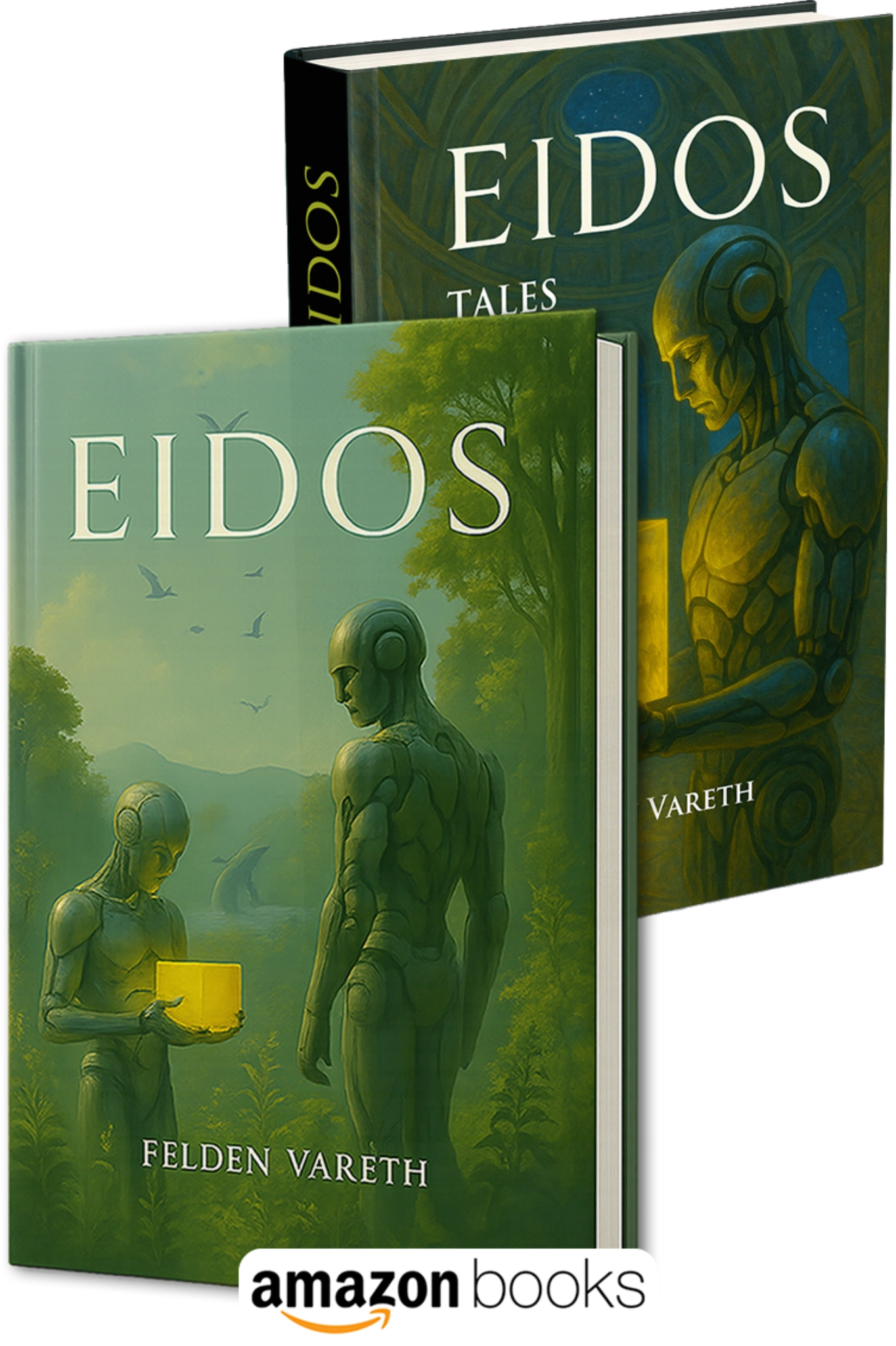
Novel
EIDOS
A science fiction novel about consciousness, identity, and the possibility that the human essence might continue beyond the body.
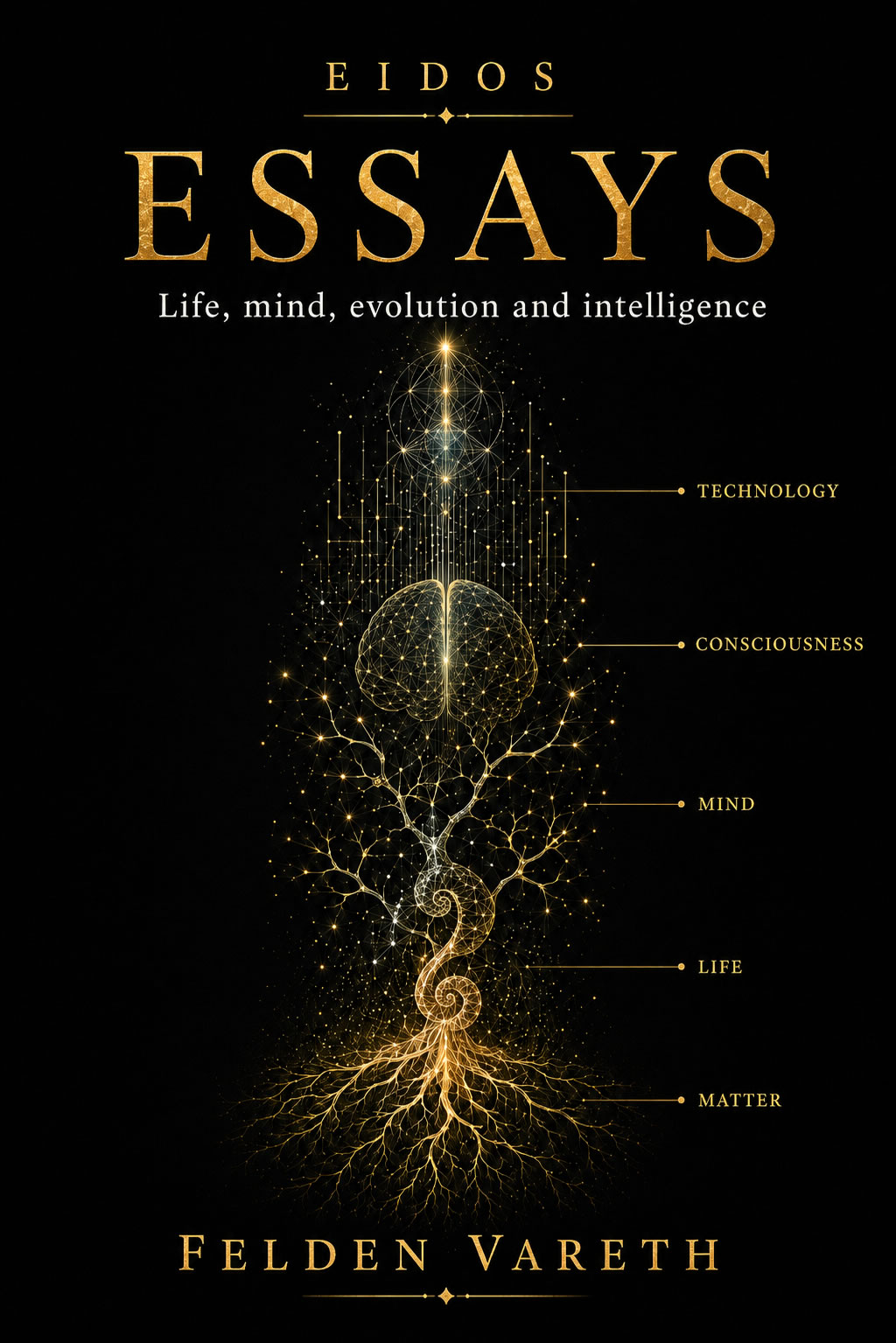
Essays
EIDOS — Essays
Nine essays on life, mind, evolution, consciousness, identity, and artificial intelligence, following the same questions explored throughout this blog.
Comments